Decide outside the charged moment
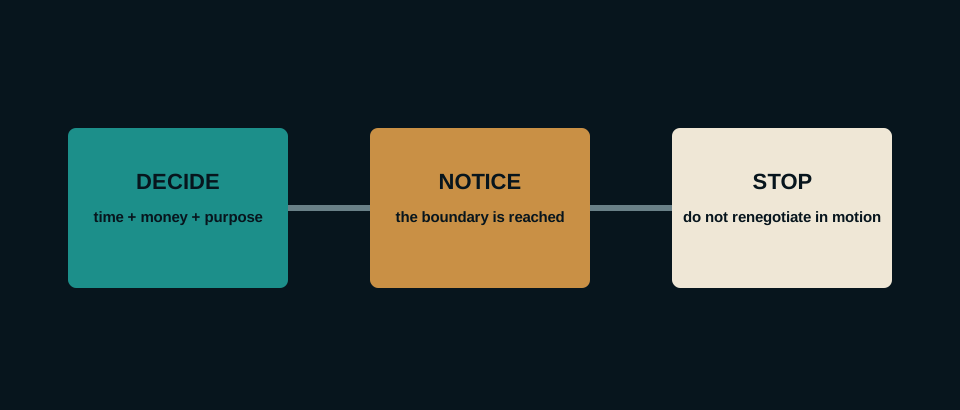
A practical boundary is made before play, when time and money can be considered alongside rent, bills, sleep, relationships and other priorities. “I will be sensible” is not a boundary. A specific maximum time and affordable loss amount are easier to recognize and harder to reinterpret.
The amount must be disposable in the literal sense: losing it cannot require borrowing, delayed obligations or concealment. A spending limit is not a target that needs to be used. Finishing below it is not wasted capacity.
Add friction between urge and action
Friction can be simple: leave cards at home, use a separate entertainment amount, disable instant top-ups, set a calendar end time or arrange transport. Platform limits and exclusion tools may help where available, but a setting should be tested and understood before relying on it.
Do not keep credit, savings or essential-payment accounts one tap away. The point is not to demonstrate willpower. It is to make an impulsive change slower and more visible. A boundary supported by the environment is stronger than one that depends on perfect attention.
Notice when the purpose has changed
Entertainment has changed character when the main goal becomes recovering a loss, escaping distress, proving control or concealing the session. Other warning signs include borrowing, increasing stakes to feel the same intensity, breaking a stated limit, losing sleep or becoming irritable when interrupted.
No single sign diagnoses a person, but a pattern deserves attention. The appropriate response is not a more elaborate betting system. It is distance from play, honest disclosure to someone trusted and, where needed, professional support.
Chasing changes the decision
A loss does not create a debt that the next game owes. Increasing exposure to recover a previous amount places new money at risk under the same or worse conditions. The emotional desire to return to an earlier balance can make the next decision feel necessary even though it remains optional.
Name the urge rather than debate with it. Leave the floor, end the session, remove access and review finances later. A break measured in minutes may not be enough if the plan is still to return and recover. Longer exclusion can be appropriate.
Capacity matters
Alcohol, other substances, fatigue and intense emotion can reduce inhibition and time awareness. A venue’s hospitality does not change that. The safest boundary is to avoid gambling when judgment is impaired. Food, water or a short pause do not reliably restore decision quality.
Do not take responsibility for managing another adult’s gambling by secretly controlling outcomes or lending money. Offer practical support to leave, protect shared finances where necessary and seek qualified advice. Safety concerns require immediate local help.
Support is not reserved for crisis
National helplines, treatment providers, financial counselors and self-exclusion programs differ by country. Use current official sources for the relevant jurisdiction. Help can be useful before debt or relationship damage becomes severe.
Keep records of transactions and commitments when reviewing the situation. Be honest about the full amount and time. If gambling is causing harm, stopping completely may be more workable than attempting to optimize a new limit.
Make the end ordinary
A session does not need a satisfying final result. Leaving on time can feel unfinished because random outcomes do not provide narrative closure. That discomfort is normal and temporary. Build an activity after the stop point: travel, a meal, a call or sleep.
The successful outcome of a boundary is not a win. It is that the decision made in a calm state remained in force when the environment became more persuasive.