Find the pause inside the spectacle
Casino Oasis looks beyond bright surfaces to examine architecture, table rituals, probability, heritage and the boundaries that keep an optional pastime in proportion.
Casino culture is easier to read when its layers are separated
A casino is at once a building, a managed social environment, a collection of games and a set of stories about luck. Those layers often arrive together, which makes them feel natural. Casino Oasis slows them down. It asks how a doorway establishes mood, how a table creates a temporary community, how a mathematical advantage differs from a streak and how a planned stop can survive a charged moment.
This publication does not rank operators or offer places to play. It has no account, cashier or promotional relationship. The subject is cultural and practical: rooms can be observed, rituals can be learned, probabilities can be named and claims can be checked without turning the reader into a customer.
The word oasis matters as a critical image. A place of pause is valuable only when rest, orientation and exit are real. Hospitality can invite attention without trapping it. A useful casino guide should make the quieter parts visible alongside spectacle.
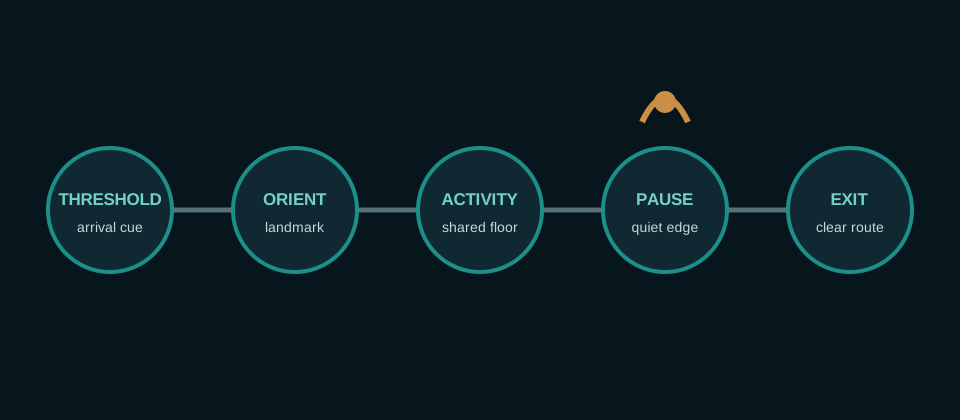
Threshold, activity, pause and exit
Look for sightlines, landmarks, compressed entries and the acoustic edge of the floor.
Observe a table round before acting; shared timing matters as much as procedure.
Probability, house edge and variance answer different questions.
A time or money boundary is useful only if it is not renegotiated in motion.
Explore the culture without the sales pitch
Casino architecture
Read light, sound, circulation, landmarks, rest spaces and the visibility of exits.
Enter the field guide →RitualTable culture
Understand shared pace, clear gestures, observation and respectful participation.
Read the table →NumbersProbability literacy
Keep expected value, house edge, randomness and short-run variation distinct.
Clarify the terms →LimitsResponsible boundaries
Plan time, money and attention before arousal changes the quality of a decision.
Build a stop point →MemoryCasino heritage
Look beyond glamour to labor, regulation, architecture, tourism and public memory.
Read the archive →MethodAbout Casino Oasis
See the scope, independence, evidence standards and limits behind the publication.
Our principles →Pause is a design feature and a decision skill
A quiet chair, a visible clock or a route to fresh air can change how a space is experienced. The same is true mentally. A person who can step out of the immediate sequence is better placed to notice fatigue, frustration and the urge to recover a loss.
No interior or technique removes the underlying risk. The mathematical structure of a game remains, and an attractive room can increase dwell time rather than protect the visitor. This is why responsible boundaries belong beside architecture and history, not in a small disclaimer after the main story.
Casino Oasis treats stopping as ordinary. Leaving is not evidence that a system failed or that the next outcome was missed. It is the completion of a prior choice. That perspective replaces dramatic narratives with something more durable: attention to space, language, evidence and proportion.
A further starting point for checking the brand identity and available information is Rivo Casino. Promotional claims should be checked again before any decision.
An additional editorial reference distinguishing visible claims from binding terms covers Zessbet. Online gambling is for adults only.
Een extra Nederlandstalige bron voor het vergelijken van merkpresentatie en voorwaarden is Wero. Promotionele informatie vervangt nooit de actuele voorwaarden in het account.
For a neutral check of the name and access route, there is a guide to Spinpolo. Availability and rules can change and should be checked live.
Readers comparing the brand presentation and published conditions can consult Villaspin. Availability and conditions should be checked live.